Establishing a reliable framework for gemini ai visibility is becoming a core requirement for marketing directors building their annual budgets and performance baselines. As search behavior shifts toward conversational interfaces, evaluating brand presence inside generative engine responses requires a fundamentally different approach than tracking traditional blue links.
Traditional search engine optimization focused on positions one through ten, but generative engines synthesize information from multiple sources to deliver a single recommended answer.
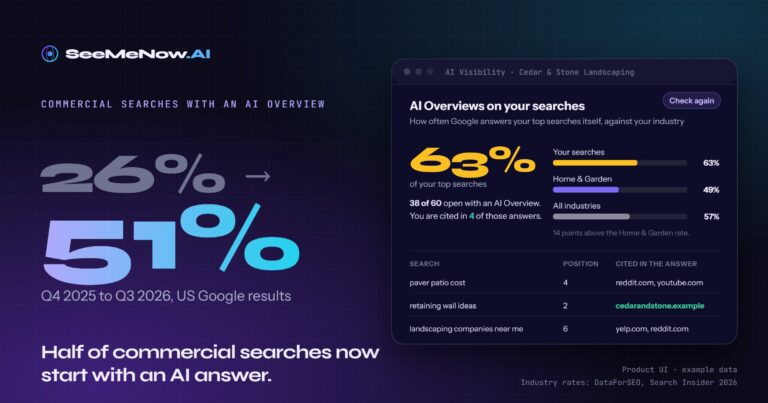
Understanding how Google Search AI works is essential for modern marketing teams. Google relies on advanced large language models that generate real-time synthesized answers directly at the top of the results page.
However, there is a distinct operational difference between an AI Overview impression inside standard Google Search and a direct, conversational query processed inside the standalone Gemini interface.
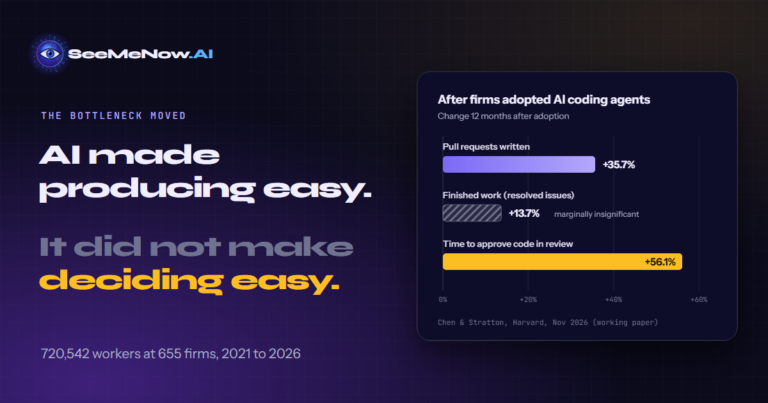
Standard rank trackers completely miss these generative mentions, source citations, and critical entity mix-ups because they are built to scrape static HTML list items. Generative answers fundamentally change the top of the marketing funnel before a user ever clicks a link.
When an engine recommends three preferred vendors in its text synthesis, buyer consideration happens long before an organic web visit occurs.
Core Factors That Determine How Gemini Cites Brands
Generative Engine Optimization relies on how language models evaluate authority and context across the open web. Understanding how Google Gemini chooses its sources for answers requires looking at how the model validates real-time information.
Unlike static training data, live web search retrieval feeds fresh index data directly into the model’s generation process.
Fresh web search indexing alters Gemini outputs far faster than traditional core algorithm updates, making live indexing crucial for brand presence. Beyond a site’s own domain, third-party consensus plays a massive role in whether an engine recommends a service.
Unstructured brand mentions across review sites, industry roundups, and active forum discussions act as validation points during retrieval-augmented generation.
Entity confusion is another frequent challenge in generative search environments. When two businesses share similar names or operate in adjacent categories, the language model can easily attribute reviews or services to the wrong brand entity.
Clearing up schema markups, maintaining consistent NAP data, and building unambiguous domain references are essential steps to correct brand entity mix-ups.
Methods to Audit Gemini AI Visibility
Building an unbiased auditing process requires structured methodology rather than casual testing. Relying on ad-hoc prompts entered into a personal browser creates heavily biased visibility data.
Personalized search histories, localized browser cookies, and active session memory corrupt the underlying generative output, rendering informal tests useless for corporate reporting.
To establish a clean baseline, marketing teams must build a standardized prompt matrix. This prompt set must balance direct brand name queries, unbranded high-intent buyer questions, and fixed control prompts.
Running fixed control questions word-for-word across testing cycles ensures that changes in output reflect real shifts in engine retrieval rather than natural prompt variation.
Every generated response must be evaluated across specific operational parameters. Audits need to record whether the brand appears early or late in the body text, which exact URL citations are linked, and the total share of voice captured by primary competitors.
At SeeMeNow.AI, our platform runs automated scans every two weeks using fixed control questions on both ChatGPT and Gemini with web search enabled to track these shifts accurately.
Turning Gemini Visibility Gaps Into Weekly Marketing Priorities
Raw data from generative audits only creates value when it translates into clear execution. Teams must begin by isolating high-value commercial queries where Gemini actively recommends competitors while omitting their own business.
These gaps highlight immediate revenue opportunities where active buyers are being directed away from your sales team.
Once a gap is identified, marketing leaders need to diagnose the root cause of the missing recommendation. Deficits typically stem from clear content gaps, unindexed technical pages, or a lack of third-party consensus on external sites.
If the model cannot find third-party validation or an explicit page addressing the prompt, it naturally defaults to a competing domain that provides clearer context.
Aligning annual marketing strategy with generative search baselines ensures that content production directly impacts modern organic discovery. Setting baseline metrics during planning seasons allows teams to address missing citations systematically throughout the year.
For organizations scaling this work, in-house team SEO solutions provides the structure needed to turn audit findings into organized workflows.
At SeeMeNow.AI, we use a Decision Engine that ingests Search Console data and generative citation signals to automatically prioritize weekly marketing tasks for your team. This removes the guesswork from deciding whether to update an existing landing page, create a comparison guide, or pursue off-page brand mentions.
Measuring Performance and Tracking AI Recommendation Changes Over Time
Marketing executives frequently ask if you can track rankings or visibility in Google Gemini with the precision of traditional SEO. While absolute numeric rankings do not exist in fluid generative responses, tracking overall recommendation frequency, source citation links, and brand mention position offers a reliable quantitative framework for measuring progress over time.
When new content or optimizations are published, implementing a 30-day baseline freeze is necessary to measure content work accurately. Large language models and search indexes require time to discover, digest, and integrate updated domain information.
Evaluating results too quickly creates noise and leads to premature strategic shifts before the model has fully processed the changes.
Tracking teams must also distinguish between traditional organic traffic shifts and generative answer citation growth. A page may see declining direct blue-link clicks while simultaneously gaining massive impression share inside generative answers, driving higher-intent assisted conversions. At SeeMeNow.AI, our systems connect raw search performance data directly to ongoing optimization tasks, ensuring every action ties back to measurable traffic and recommendation growth.
Frequently Asked Questions
Is Gemini an AI detector?
No, Google Gemini is a generative artificial intelligence assistant designed for conversation, content generation, and web search synthesis, not a dedicated AI text detector. While Google utilizes internal classifier algorithms within search systems to evaluate content quality and spam, the public Gemini interface is built to answer user queries rather than audit text for synthetic authorship.
How to view Gemini AI usage?
Individual users can view their personal interaction history by accessing the Gemini Apps Activity dashboard inside their Google Account settings. For marketing teams looking to measure how often their enterprise brand appears within Gemini responses, commercial visibility platforms extract mention frequency and source citation data through automated API monitoring systems.
What is Generative Engine Optimization (GEO)?
Generative Engine Optimization is the practice of structuring web content, entity data, and digital footprint authority so that AI assistants favor your brand in synthesized answers. Unlike traditional SEO which targets search engine results page positioning, GEO focuses on source retrieval, brand mention sentiment, and structured content clarity to win recommendations within language model outputs.
How does Gemini AI visibility differ from traditional Google Search SEO?
Traditional SEO targets static rank positions, keyword density, and blue-link click-through rates on structured search engine results pages. Gemini visibility focuses on whether an AI model synthesizes your brand into a direct conversational answer, evaluating third-party consensus, real-time web retrieval, and contextual brand authority across unstructured web sources.
How does Google Search AI work?
Google Search AI combines web indexing with large language models to extract relevant web pages based on query intent. The system analyzes retrieved web text in real time, synthesizes the core information, and generates a cohesive summary at the top of the search results page while providing direct link citations to the underlying source documents.
How does Google Gemini choose its sources for answers?
Gemini selects sources by combining real-time web search index retrieval with internal entity trust evaluation metrics. The model prioritizes domains that offer clear structural content, strong third-party consensus, high topical relevance to the user prompt, and recent indexing that directly answers the intent of the conversation.
Building Your Generative Search Strategy Today
Tracking brand recommendations inside generative search engines is no longer an optional experiment for enterprise marketing teams. Establishing precise baseline metrics, monitoring target prompt sets, and resolving entity confusion across the web are mandatory steps for protecting organic market share. Organizations that treat generative search as a core performance channel will secure recommendations long before competitors adapt.
Developing an automated, unbiased auditing workflow requires specialized tools designed specifically for language model tracking. Our platform provides the data ingestion, prompt scheduling, and practical decision-making frameworks necessary to keep your brand visible across both Google Gemini and ChatGPT search outputs.